Separation suggests the momentum of passage; as gaps form, movement finds its medium.
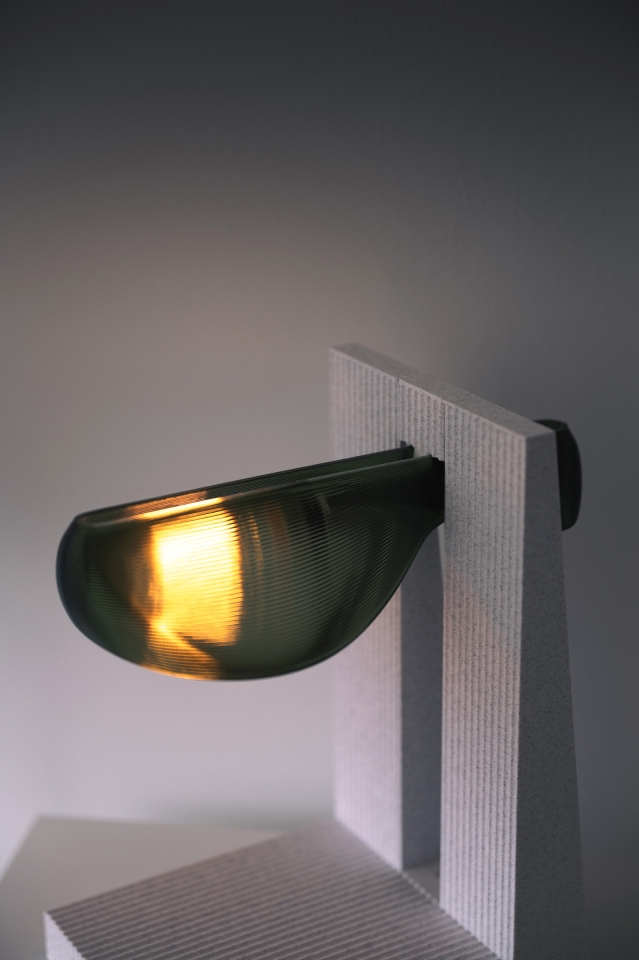
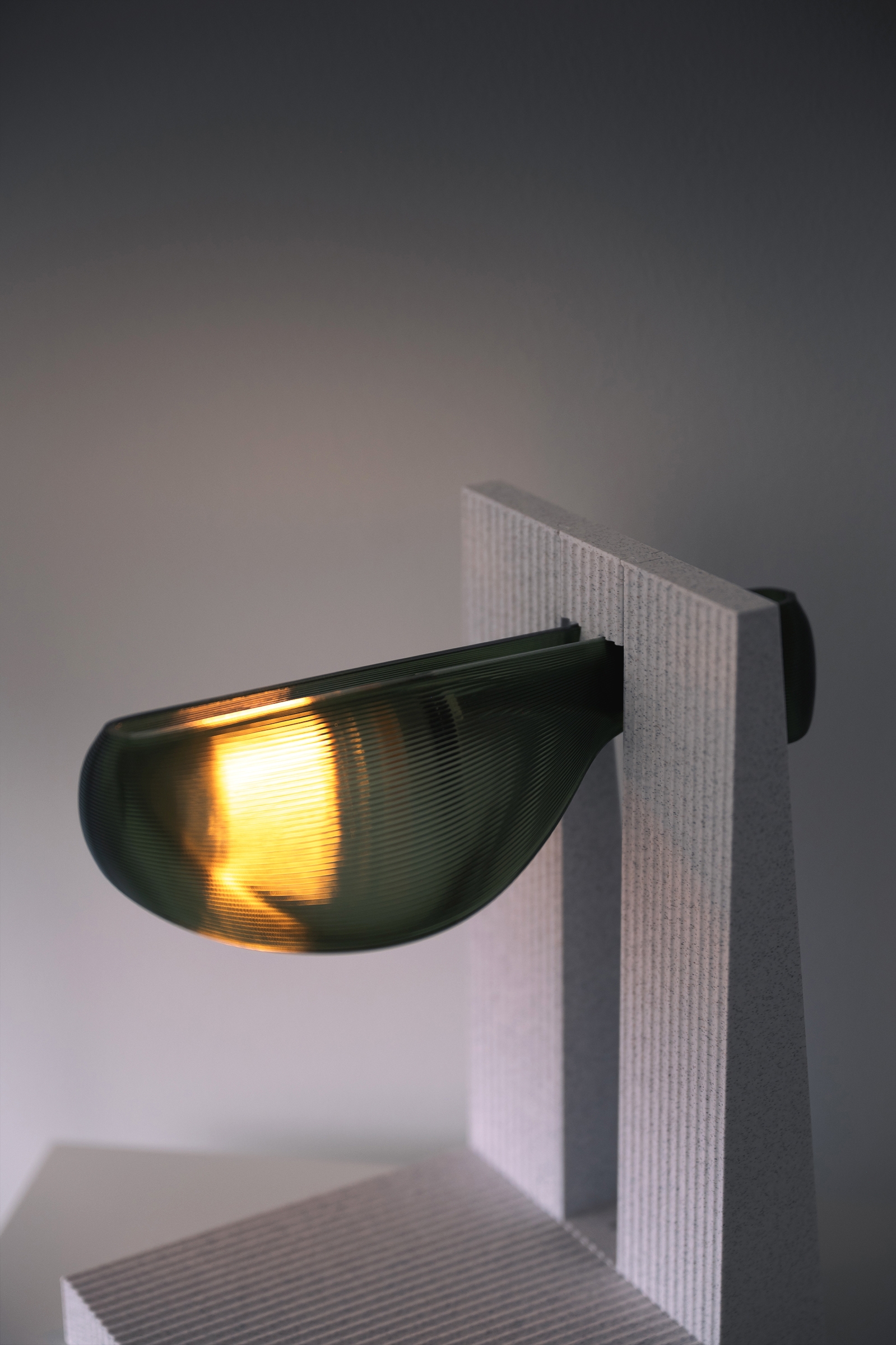
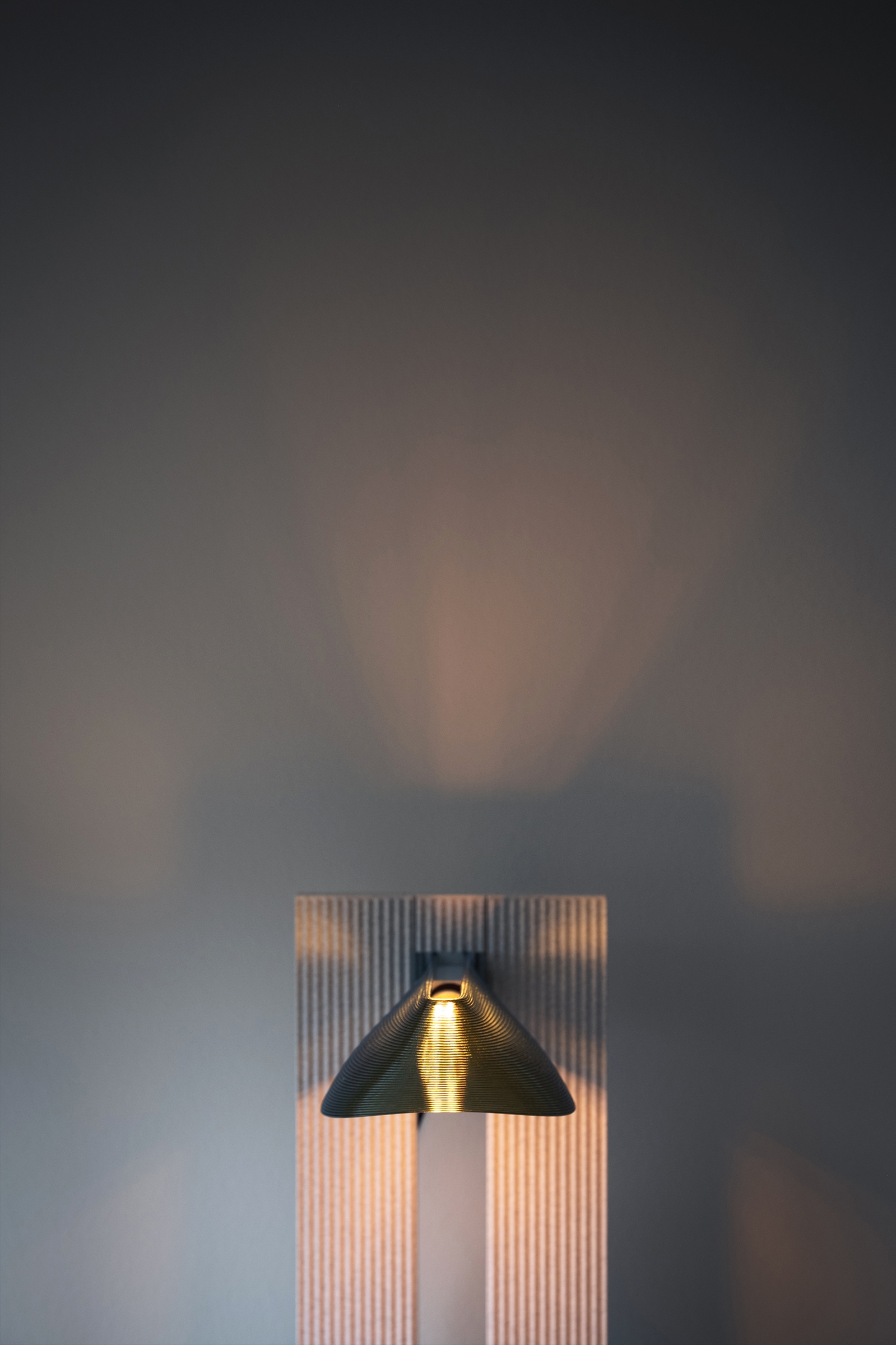
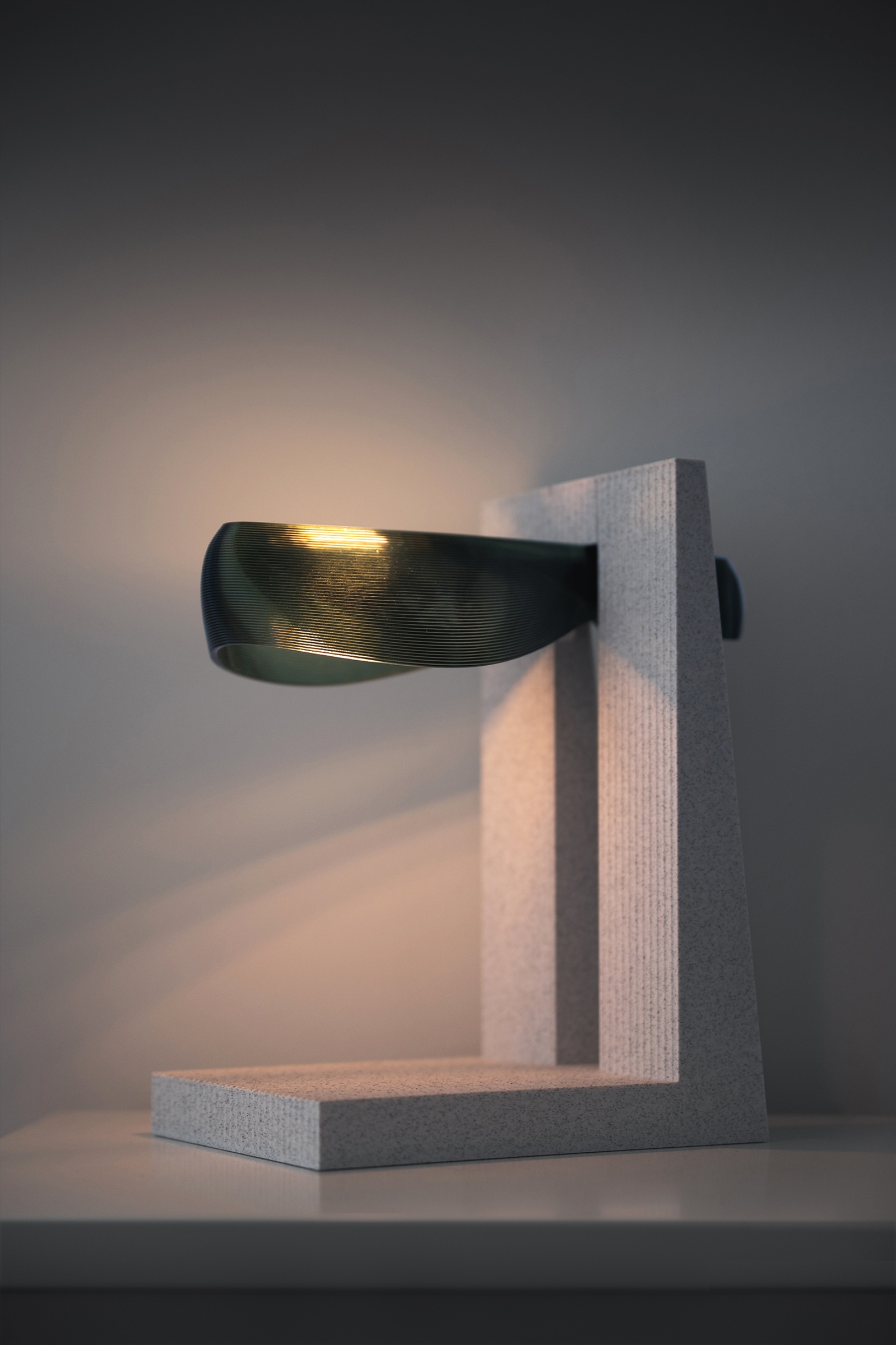
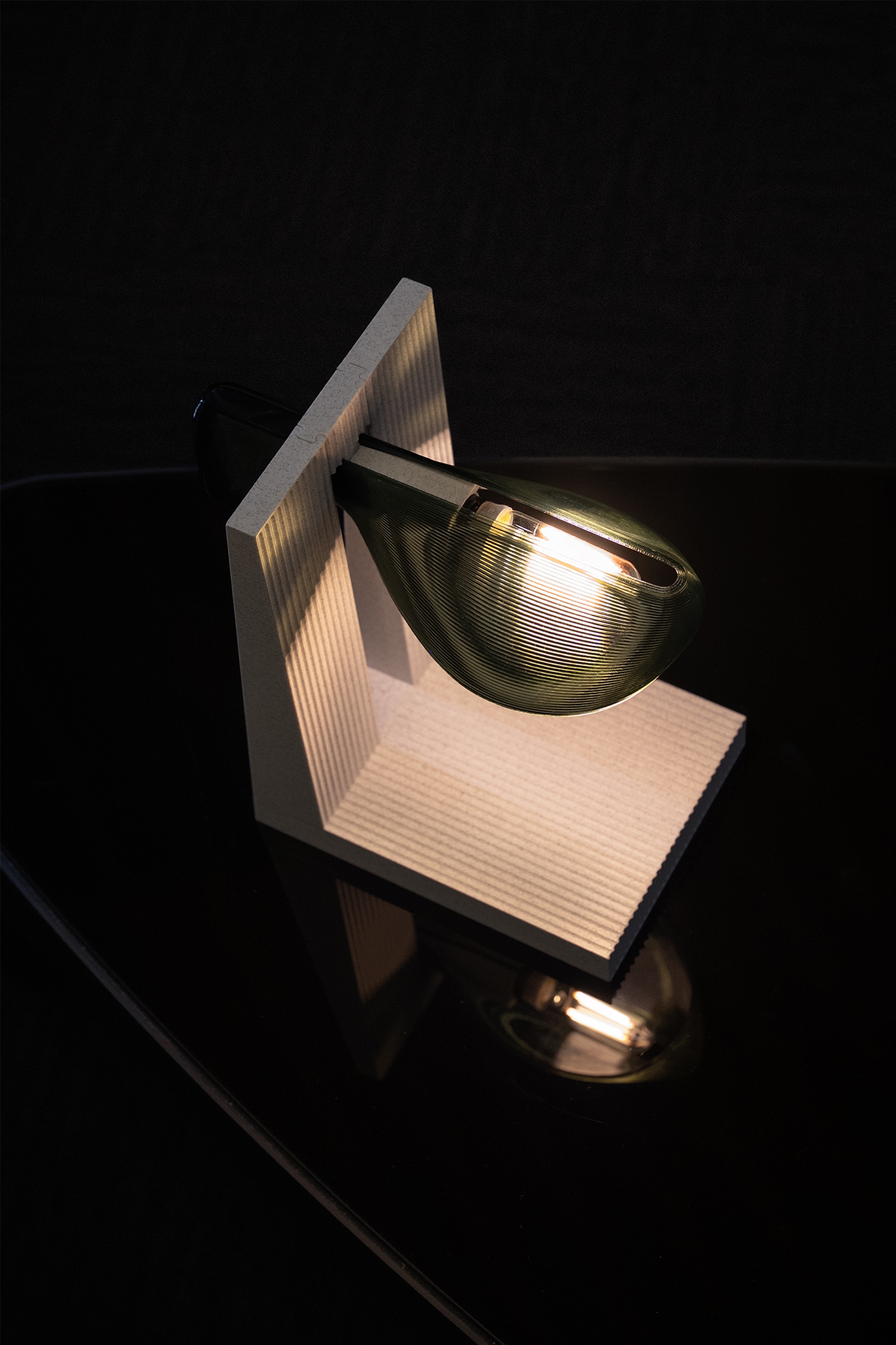
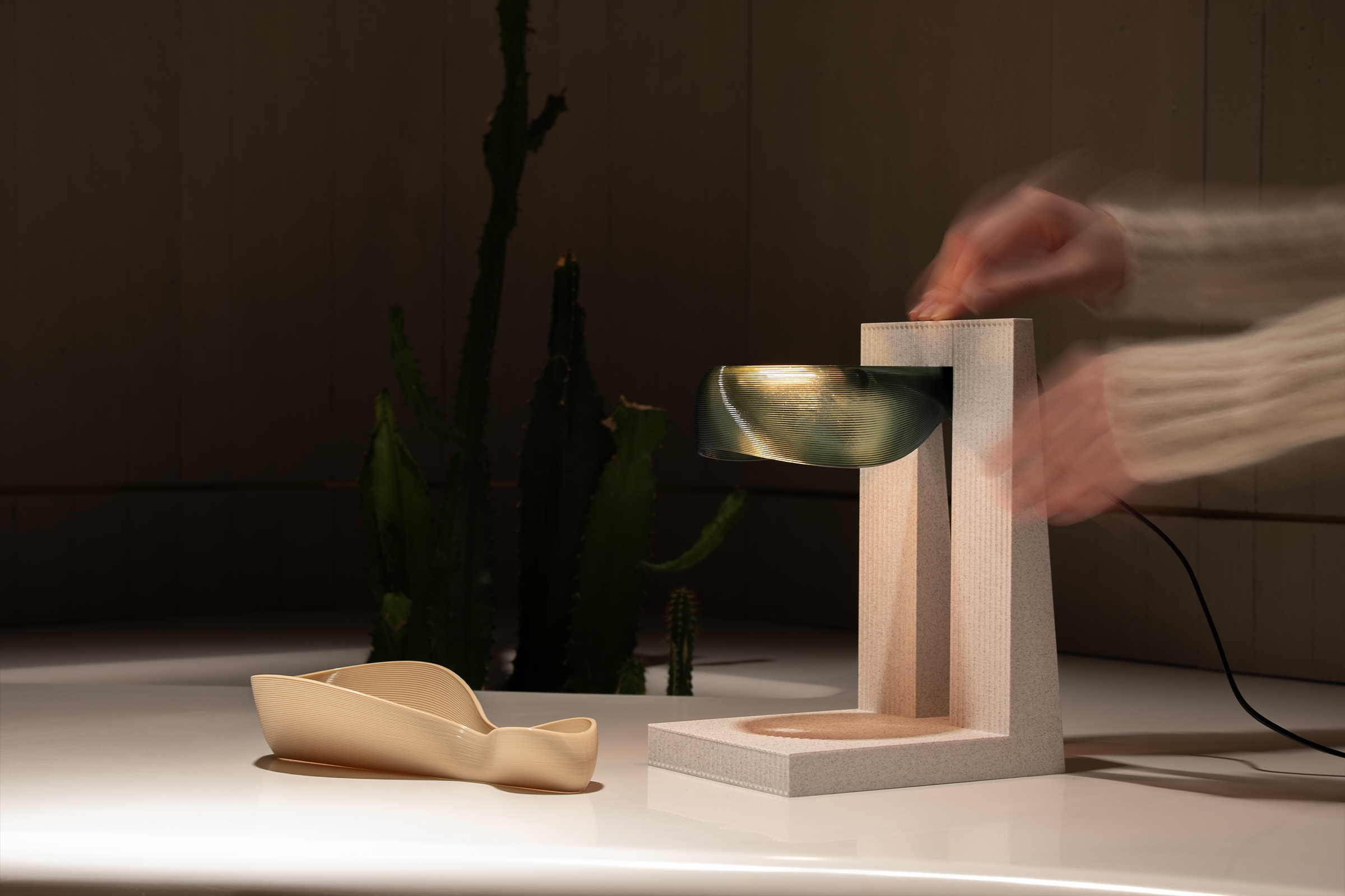
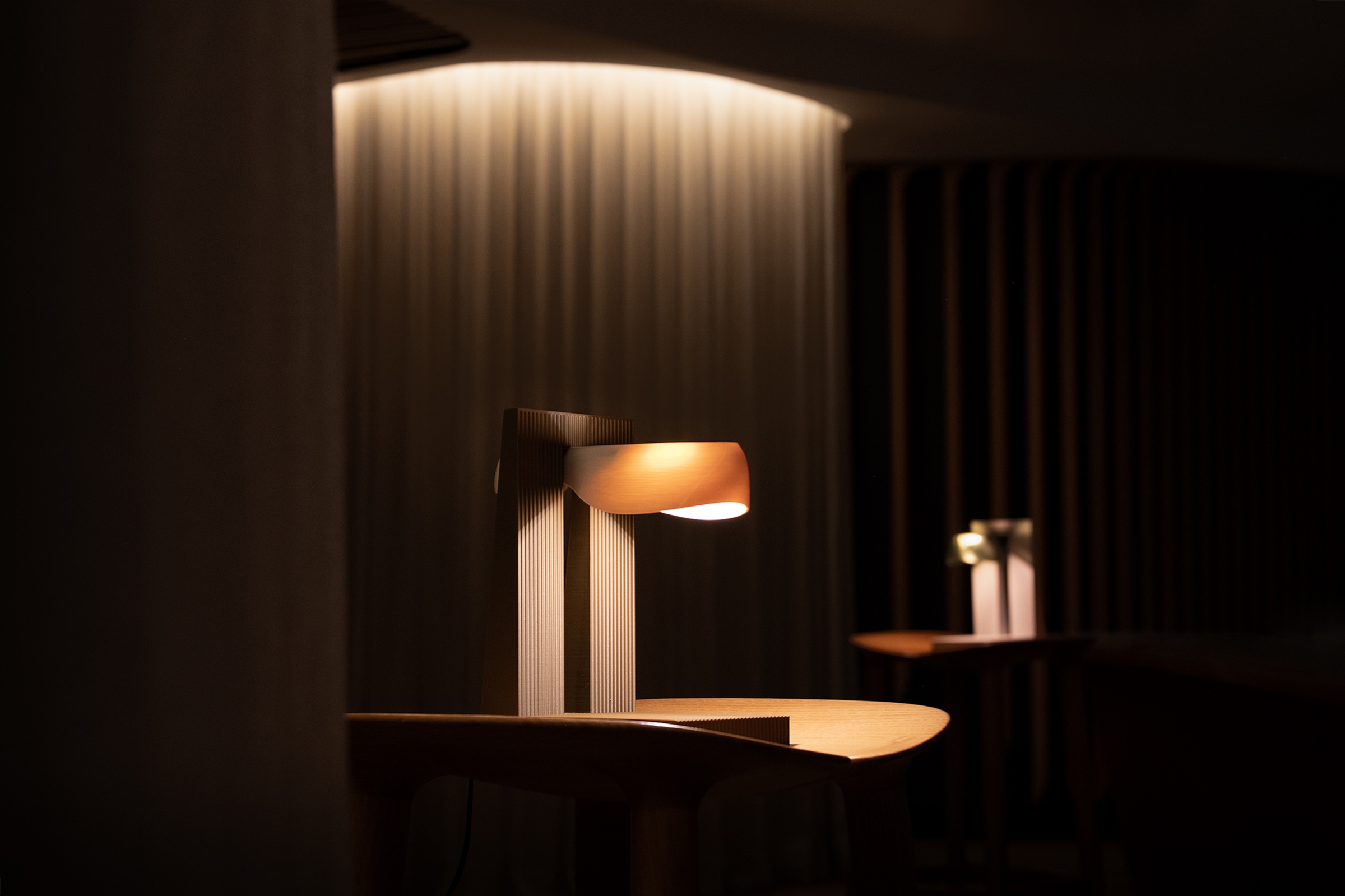
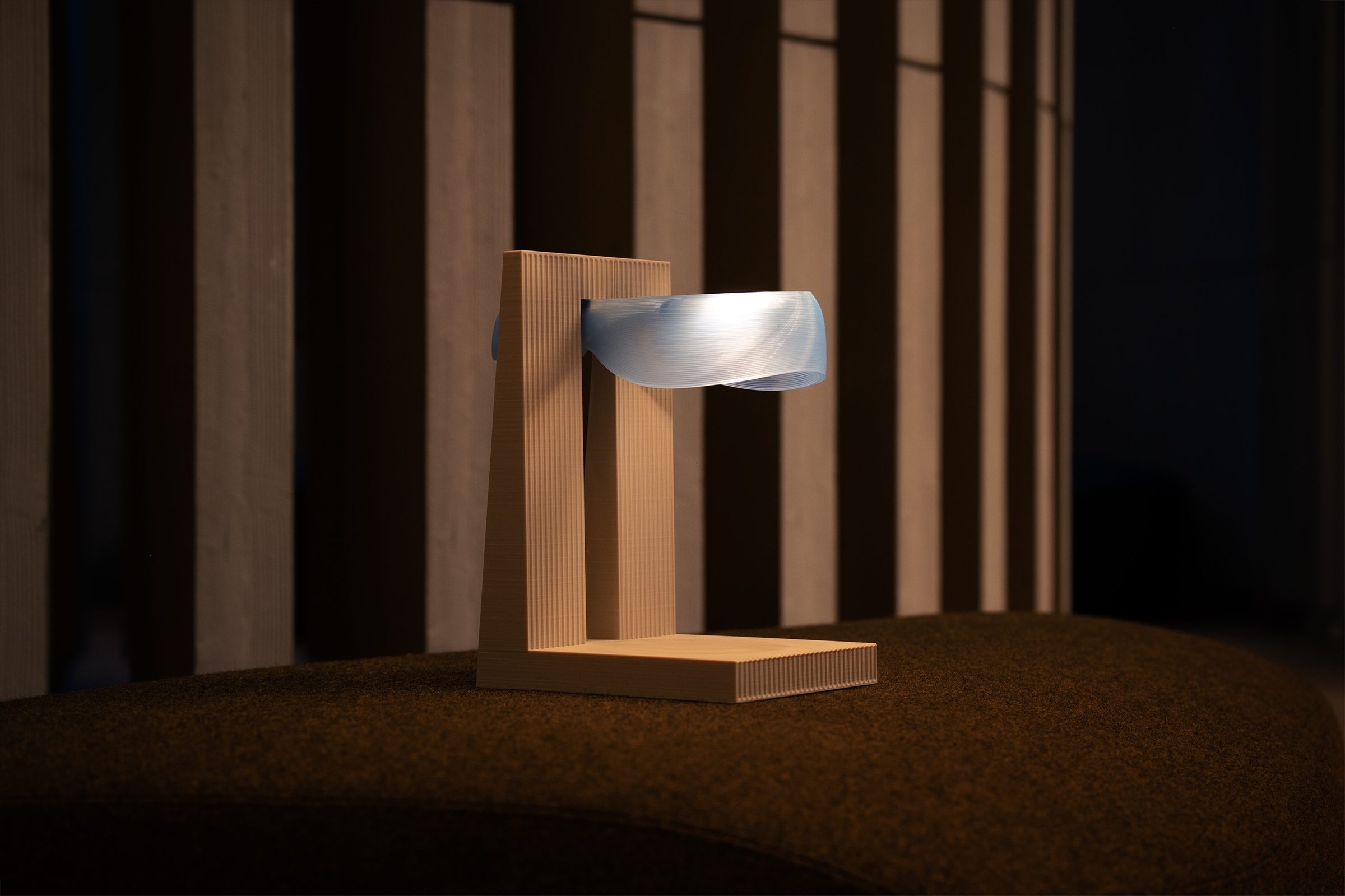
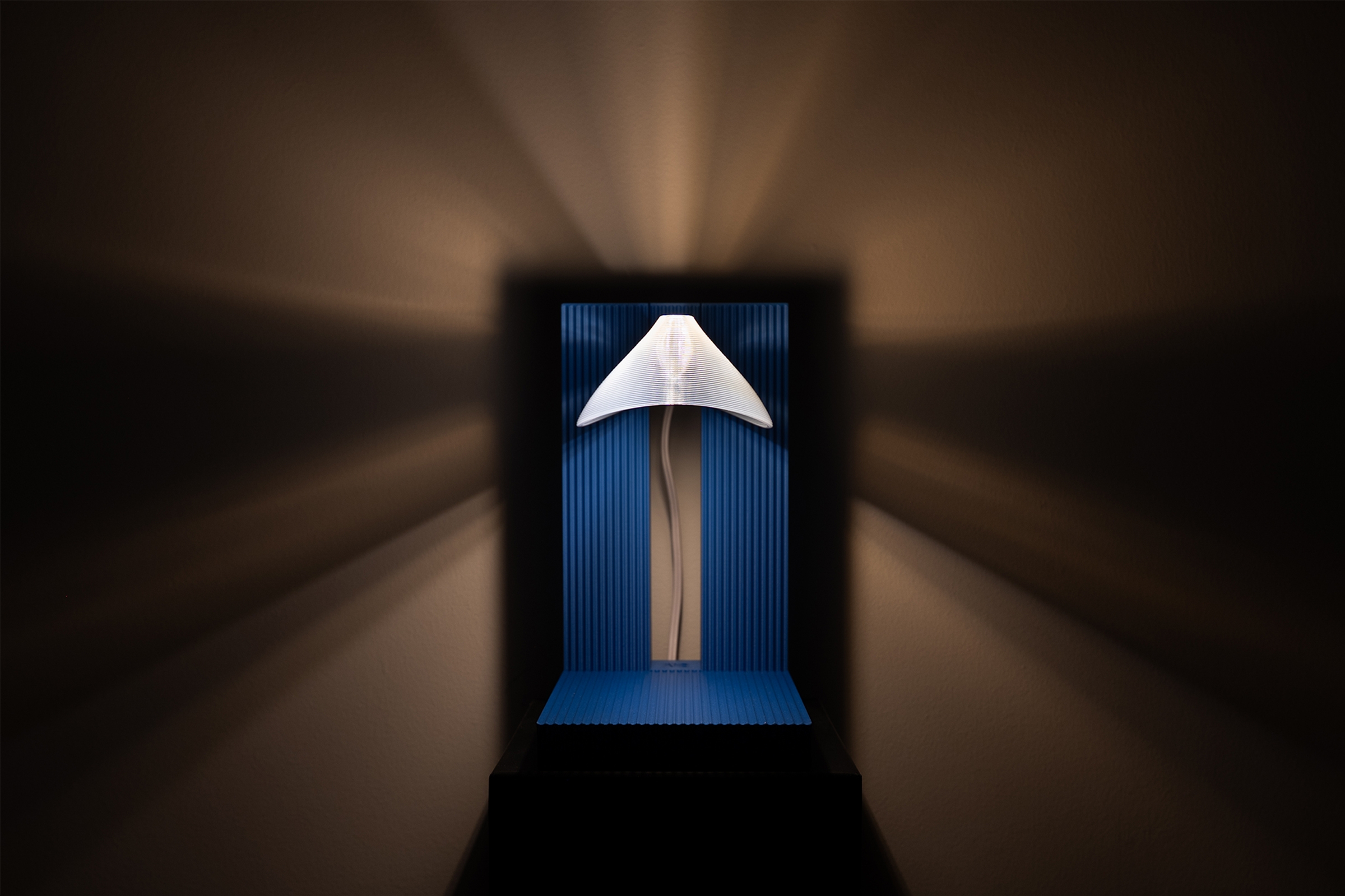
Inspired by the duality in John Hejduk’s Wall House II, the Hejduk Lamp turns architectural thinking into tactile light. Classical column-inspired textures anchor the form while parametric, organic curves guide a shifting shadow path where time, space, and illumination converge.
Duality continues in making: the lampshade is produced with non-planar 3D printing. By programming G-code directly, we choreograph the printhead’s 3D trajectory and extrusion rhythm, solidifying traversal into fluid geometry. The support is printed with conventional FDM for crisp detail — together embodying “separation and connection” in craft.
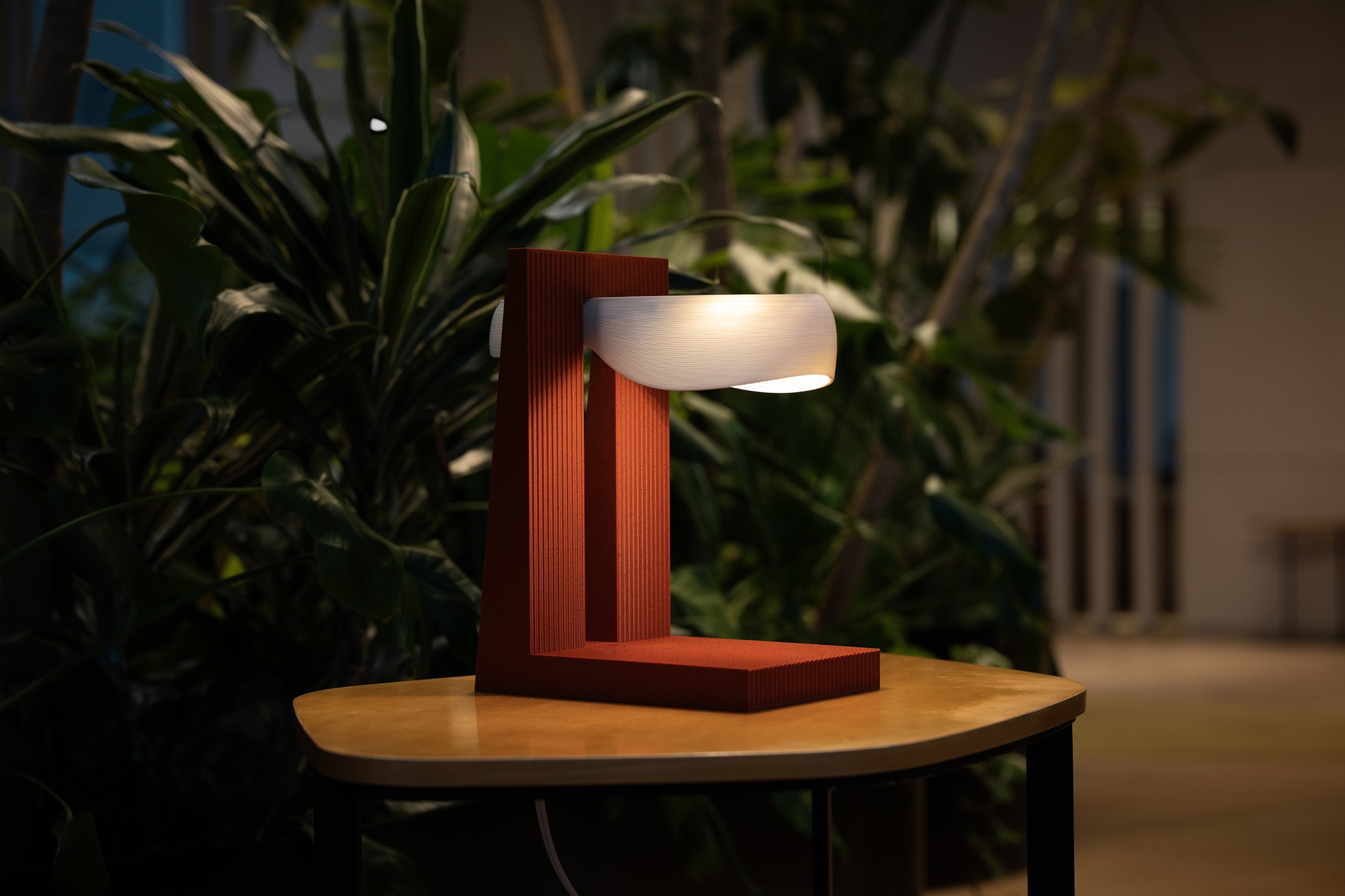
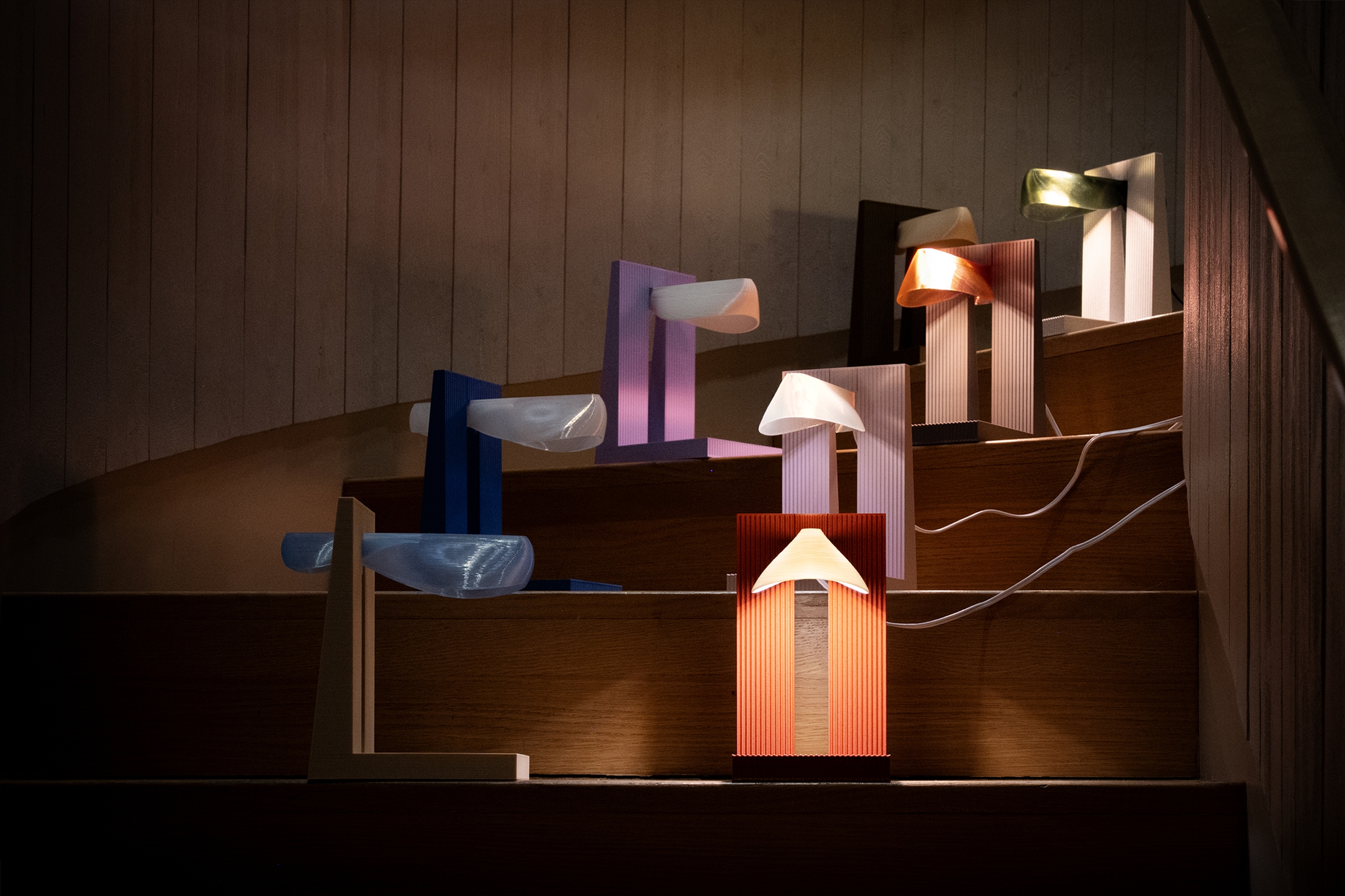
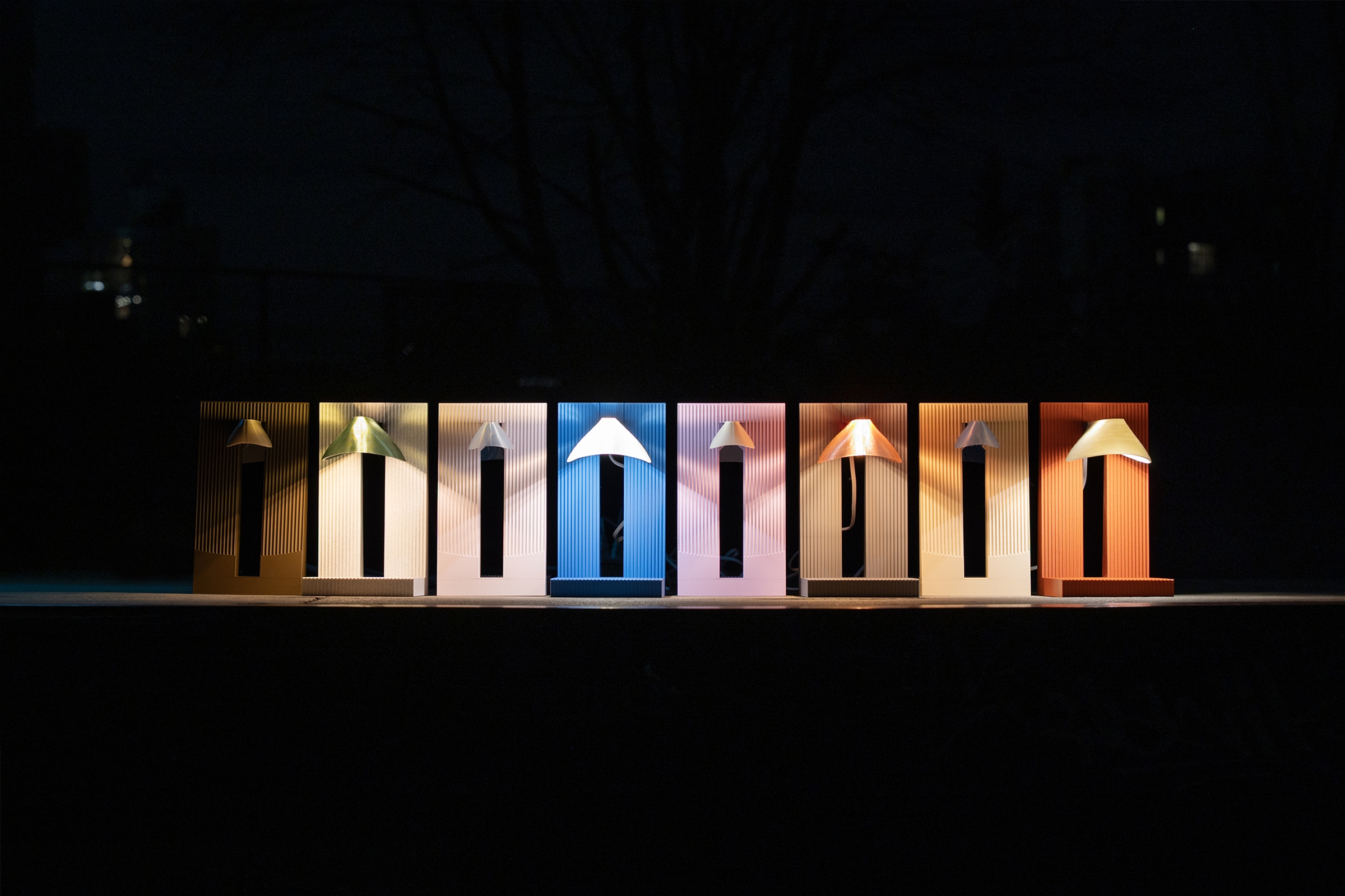
The paired parts enable eight curated palettes, balancing harmony and tension so the lamp can blend in or stand out from environment. Fully 3D-printed modular components lock shade, frame, and circuitry into an intuitive system for assembly, repair, and re-composition. Users can replace parts to extend lifespan or refresh color and character. Returned components are collected and recycled into new batches, keeping the product evolving in a closed loop.