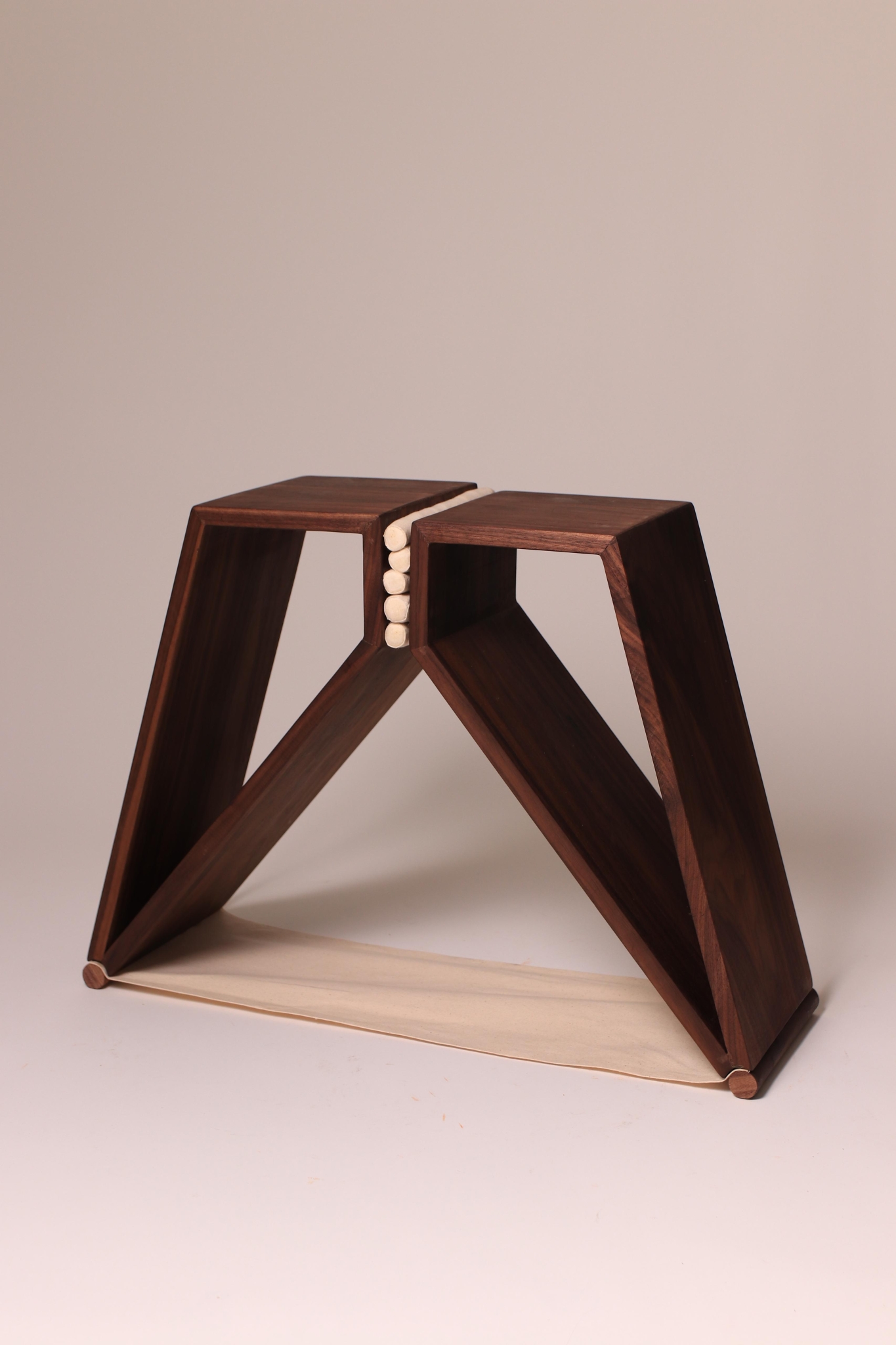
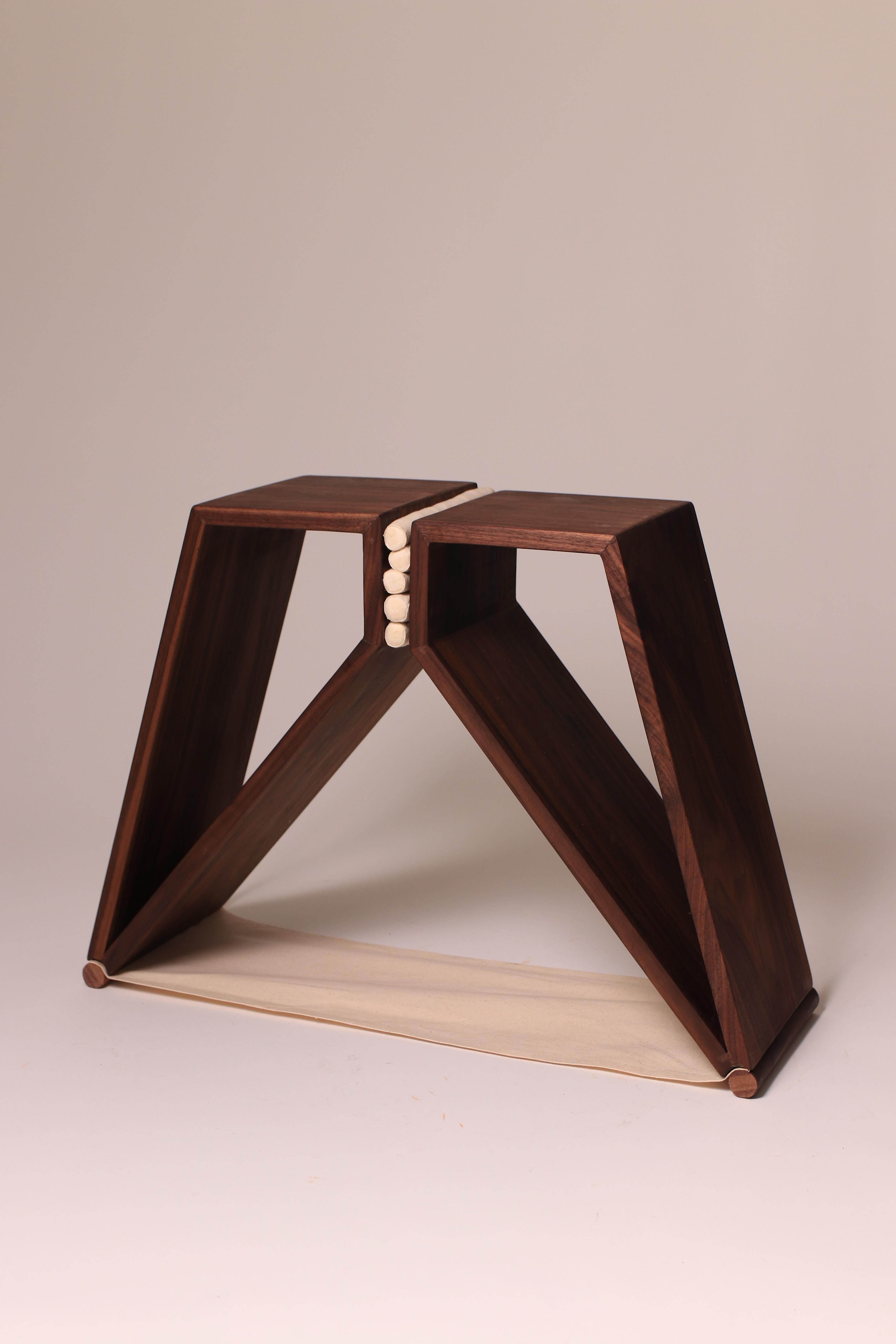
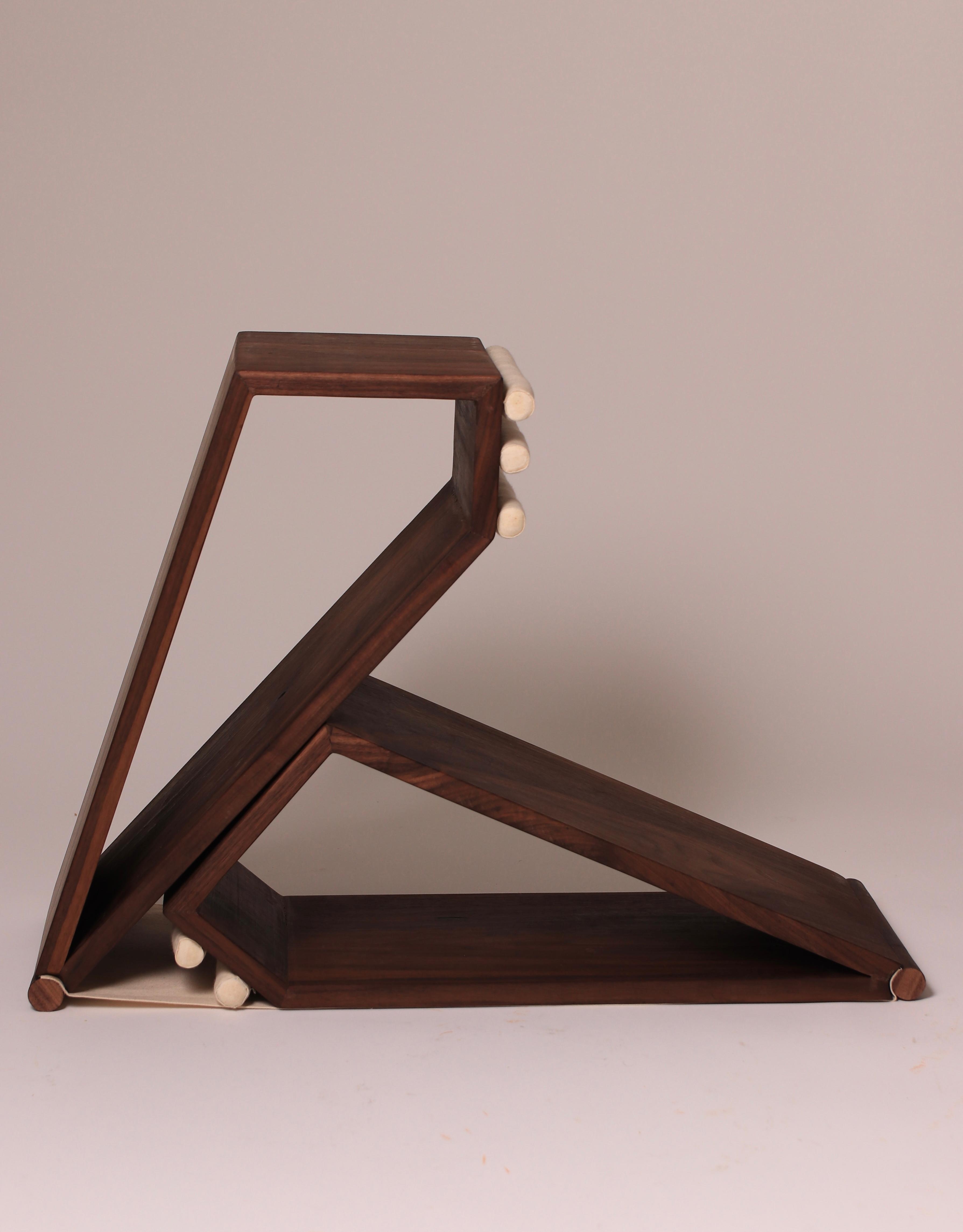
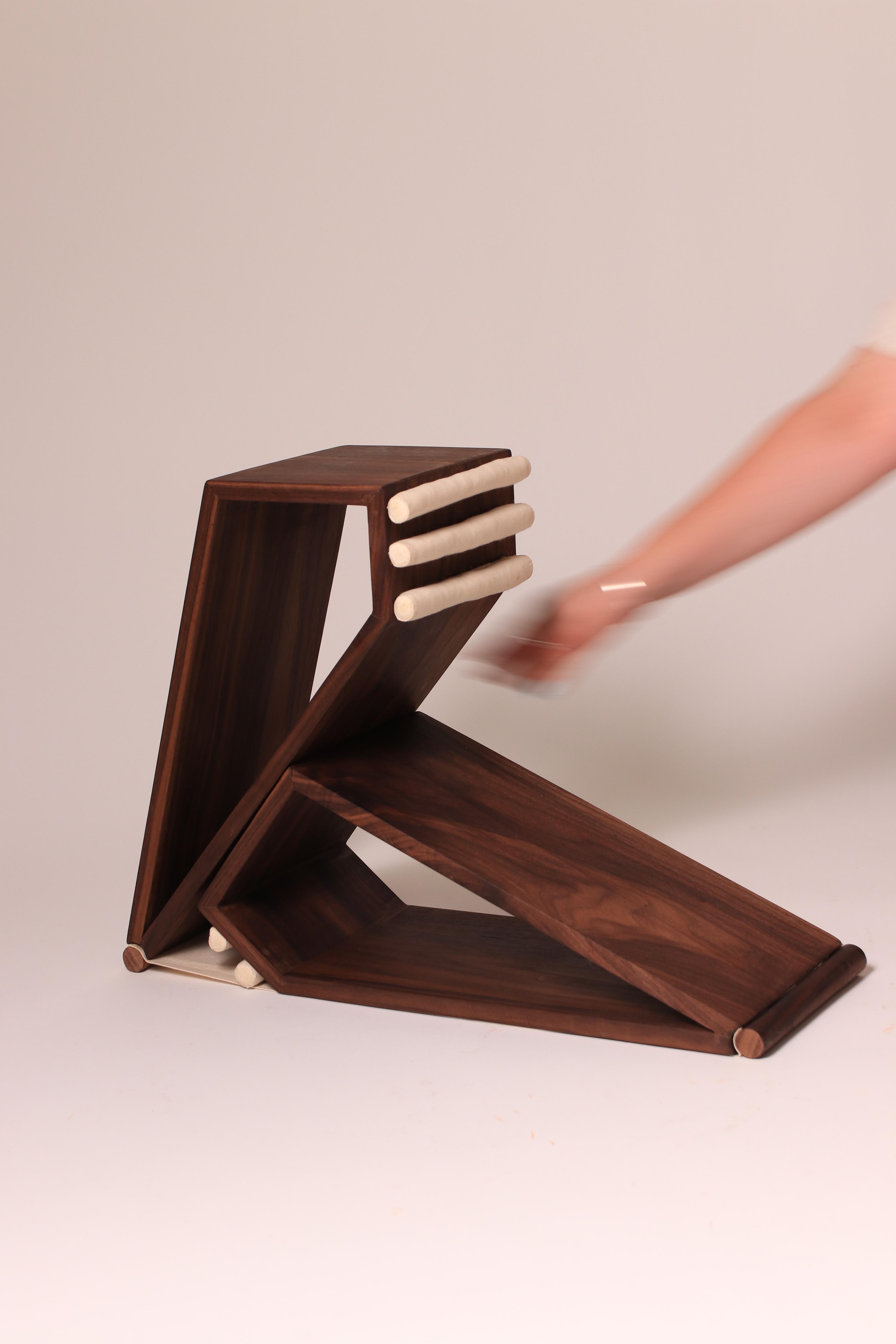
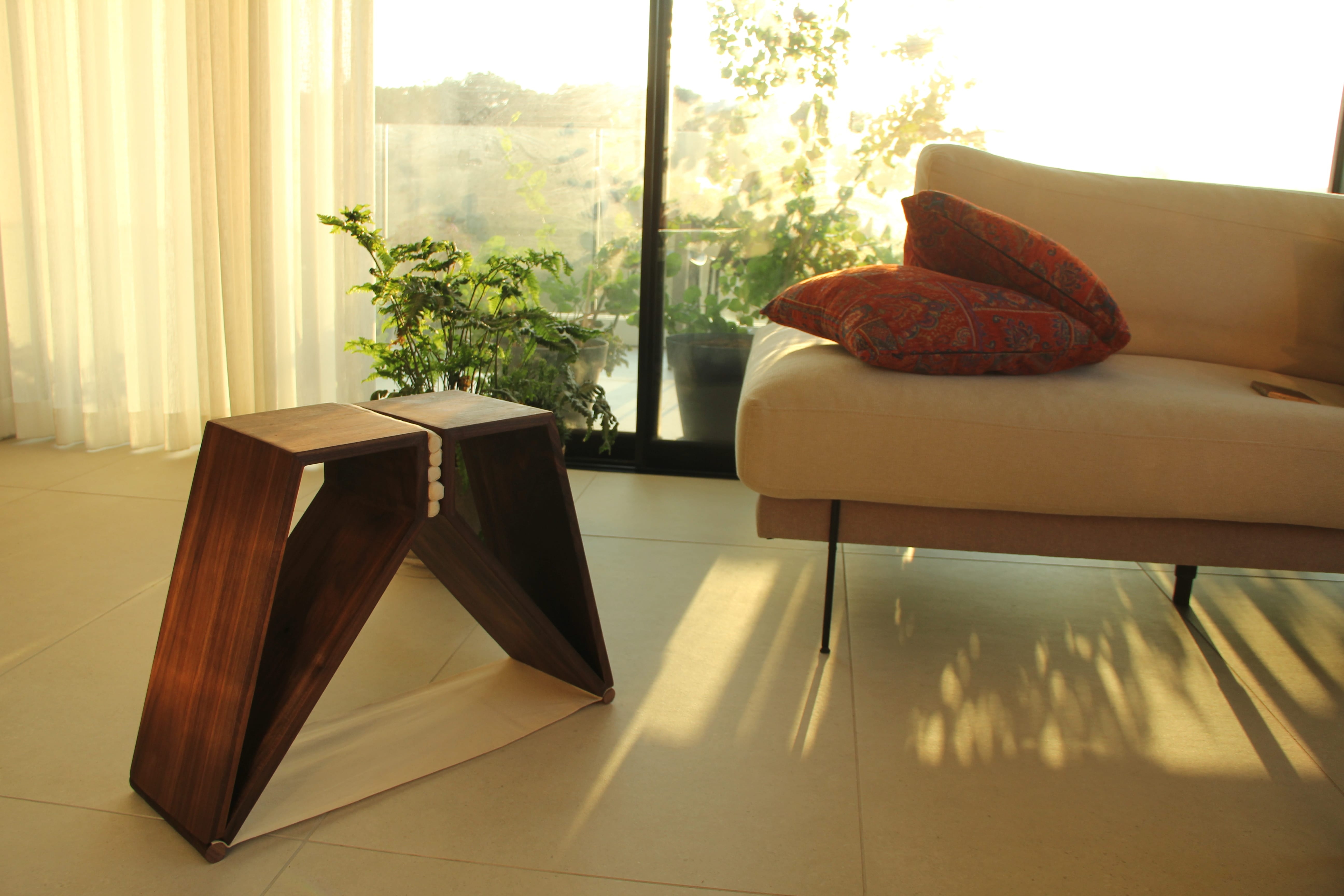
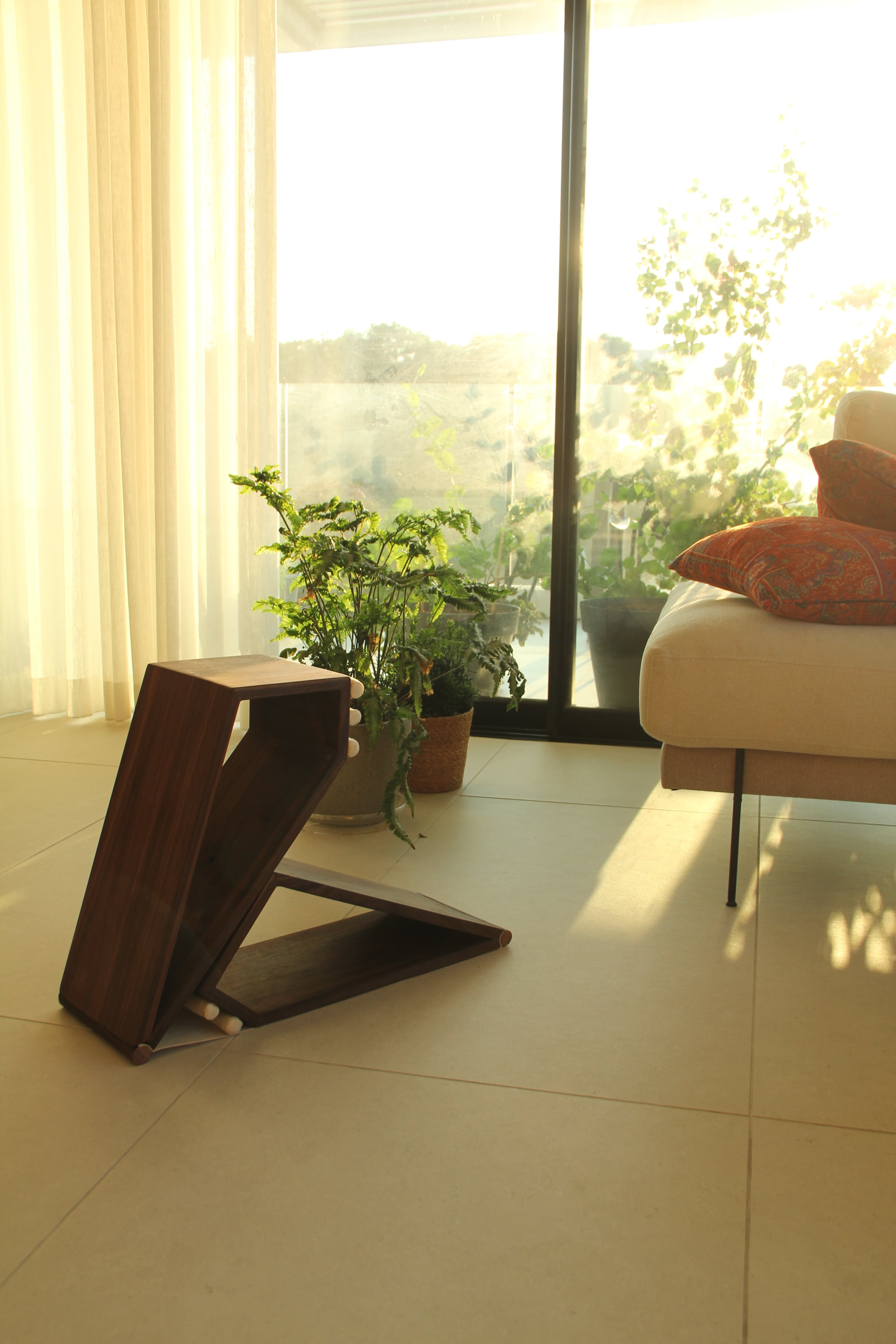
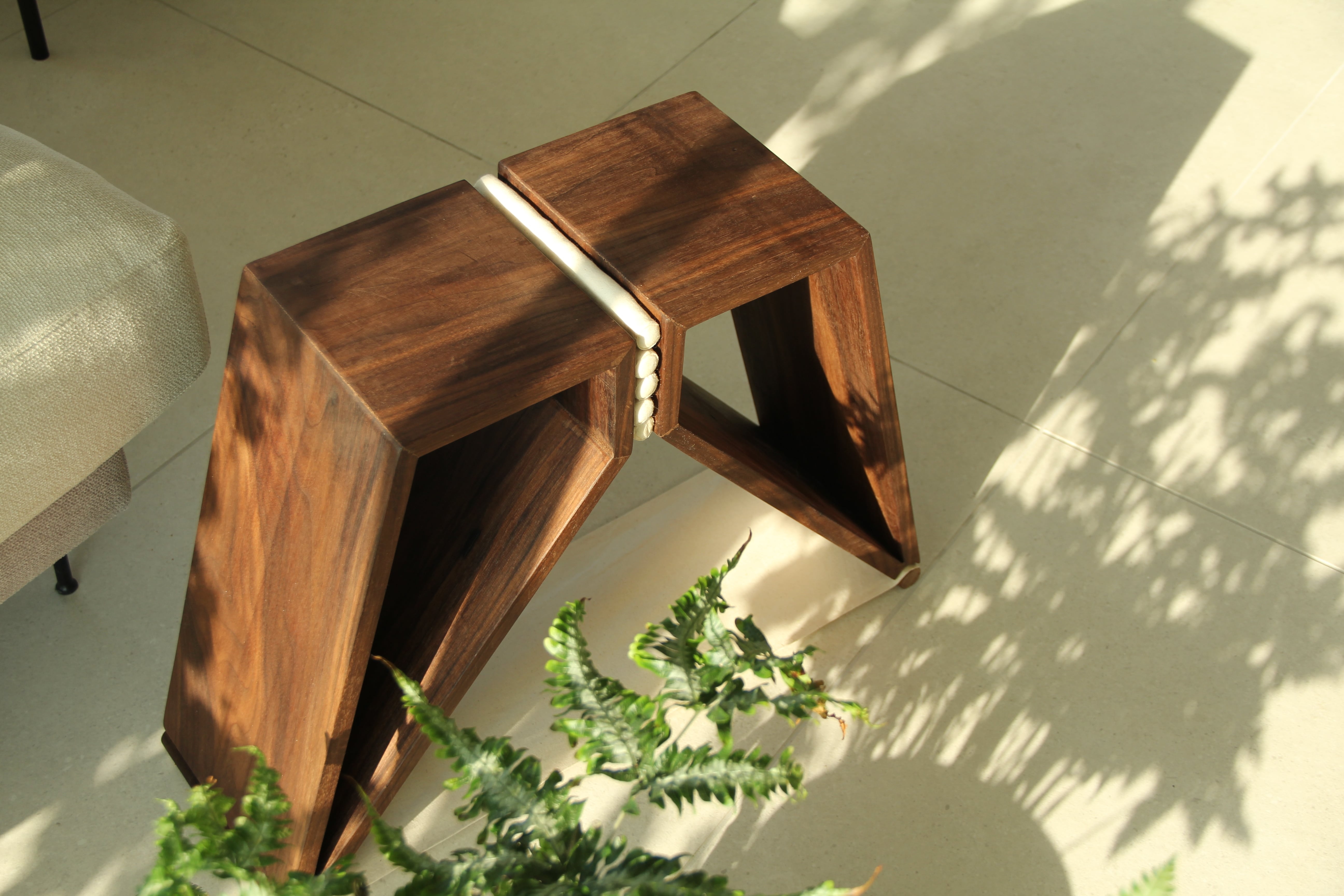
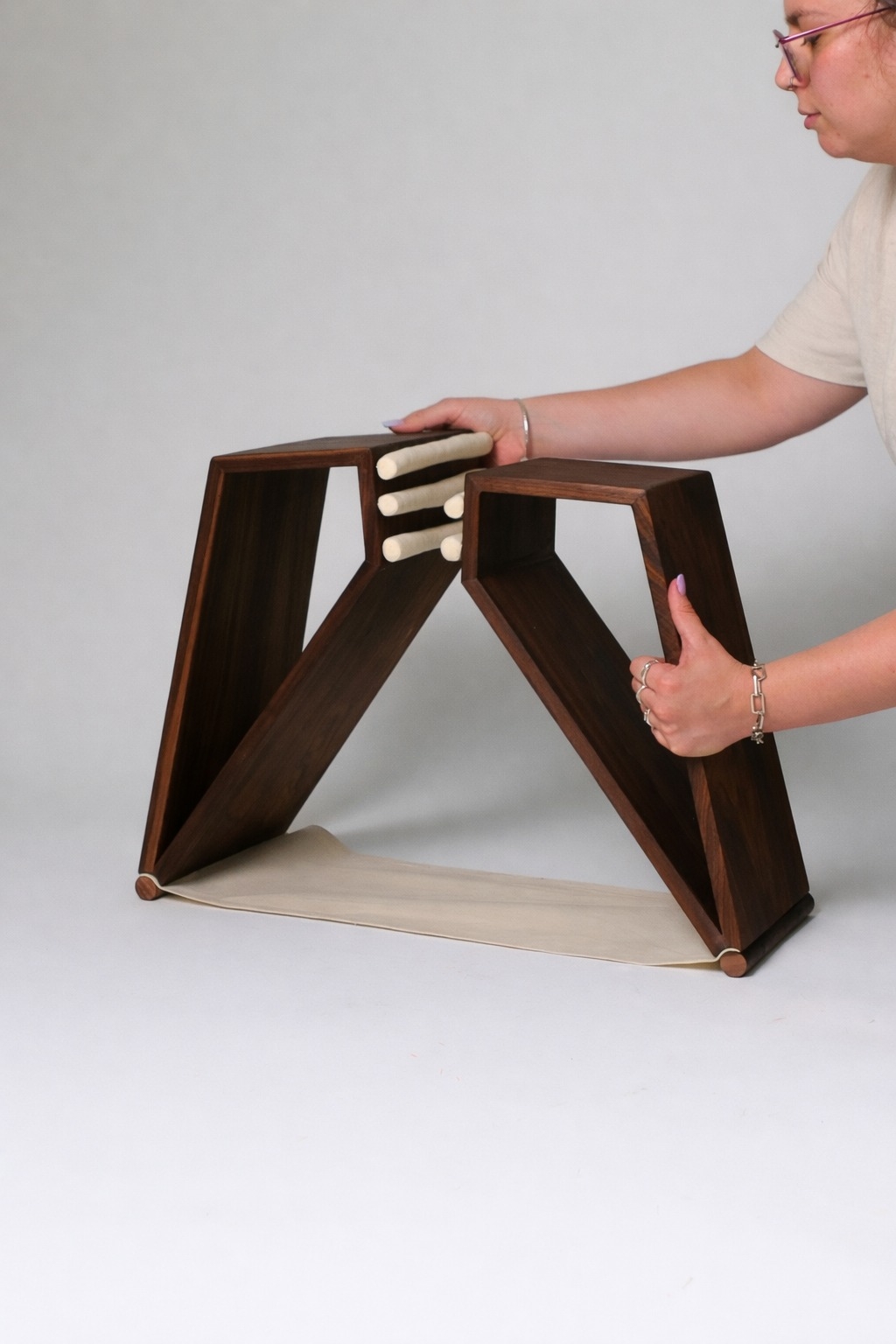
TAUT is a transformable wooden stool that draws on the visual language of origami, using articulated planar surfaces and sharp creases to define its form. The stool exists in two stable configurations, each maintaining the same seating height while resulting in a different structural arrangement, altering the perceived weight and balance of the object. Rather than relying on rigid mechanical locks, TAUT is stabilized through soft materials—specifically fabric tension and compressed textile elements—that unintuitively become its primary structural agents.
A tensioned fabric span defines the overall geometry, while interlocking cushioned elements at key contact points operate under compression, creating friction-based stabilization between wooden planes. What appears visually soft functions structurally hard: resisting movement, absorbing force, and locking the configuration in place.
TAUT questions conventional material hierarchies by assigning structural responsibility to softness. Through the interaction of tension, compression, and geometry, the project explores how stability can emerge not from rigid joints, but from controlled softness and force-driven relationships.